Shedding Gentle Light: Navigating Night Lights for Your Little One's Sleep
As parents, we constantly seek ways to nurture a peaceful environment for our little ones, especially when it comes to bedtime. The question of whether to use a night light for kids' sleep often comes up, a cozy glow promising comfort against the shadows. But does that soft illumination truly help, or could it subtly interfere with the deep, restorative sleep our tiny paleontologists need?
This isn't about a simple on-off switch; it's about understanding the delicate balance of light, darkness, and children's sleep cycles. Let's explore what pediatric experts share about navigating night lights to support your child's journey to dreamland.
The Science of Darkness: Why It Matters for Sleep
Our bodies, and especially those of growing children, are wonderfully attuned to the natural rhythm of day and night. This internal clock, called the circadian rhythm, is profoundly influenced by light and darkness. When it comes to sleep, darkness is a powerful signal.
According to the American Academy of Pediatrics (AAP), exposure to light at night can suppress the body's production of melatonin, a hormone critical for sleep. Melatonin is often referred to as the "sleep hormone" because it helps regulate the timing of sleep [https://www.healthychildren.org/English/healthy-living/sleep/Pages/default.aspx]. When the sun sets and darkness descends, our brains naturally begin to produce more melatonin, signaling to the body that it's time to wind down. Even dim light exposure before or during sleep can interfere with this natural process, potentially making it harder for children to fall asleep and stay asleep.
"Melatonin secretion is very sensitive to light. Even very low levels of light, if they are the wrong wavelength, can reduce melatonin production." — The Sleep Foundation
This sensitivity is particularly pronounced in children, whose eyes are more transparent than adults', allowing more light to reach the retina. The Sleep Foundation highlights that exposure to light, particularly blue light emitted from screens or certain LED bulbs, can significantly suppress melatonin production [https://www.sleepfoundation.org/children-and-sleep]. This doesn't mean all light is bad, but it underscores the importance of thoughtful choices when it comes to any artificial light in your child's sleep space.
When a Night Light Can Be Helpful
While darkness is generally optimal for sleep, there are valid reasons why many families choose to incorporate a night light. For some children, the complete absence of light can be unsettling. A gentle night light can offer a sense of security and familiarity, particularly if your child is navigating developmental stages where fear of the dark emerges.
Pediatric experts at Stanford Children's Health acknowledge that a night light can provide reassurance for children who are afraid of the dark [https://www.stanfordchildrens.org/en/topic/default?id=sleep-problems-in-children-90-P02235]. This is a common phase for many preschoolers and early elementary children, as their imaginations blossom and they begin to process more complex emotions. A soft glow can transform potentially frightening shadows into something less intimidating, making the transition to sleep smoother. If your child is struggling with fear of the dark, you might also find support in our post on Shedding Light: Gentle Help for Fear of Dark Bedtime Worries.
Additionally, a dim night light can be practical for parents. It can provide just enough visibility for nighttime feedings, diaper changes, or comforting a child without fully waking them or yourself. This minimal light can prevent stumbling and allow you to tend to your child's needs while maintaining a sleep-friendly atmosphere.
Choosing the Right Night Light: Less is More
If you decide a night light is a good fit for your child, the type of light you choose makes a significant difference. Not all night lights are created equal when it comes to supporting healthy sleep.
Here's what to consider for your little dino fan's sleeping cave:
-
Color Temperature Matters: The color of the light is paramount. Warm-toned lights, such as red, amber, or orange, are generally considered the least disruptive to melatonin production. The National Institutes of Health (NIH) notes that blue light has the strongest effect on melatonin suppression [https://www.nih.gov/news-events/news-releases/blue-light-has-strong-effect-melatonin-suppression]. Therefore, avoiding night lights that emit blue or bright white light is often recommended. Look for lights specifically marketed as "warm white" or with a red/amber hue.
-
Dimness is Key: The goal is a gentle glow, not a beacon. The light should be just bright enough to alleviate fear or allow for safe navigation, without illuminating the entire room. Many modern night lights come with adjustable brightness settings, which can be incredibly helpful for finding the sweet spot.
-
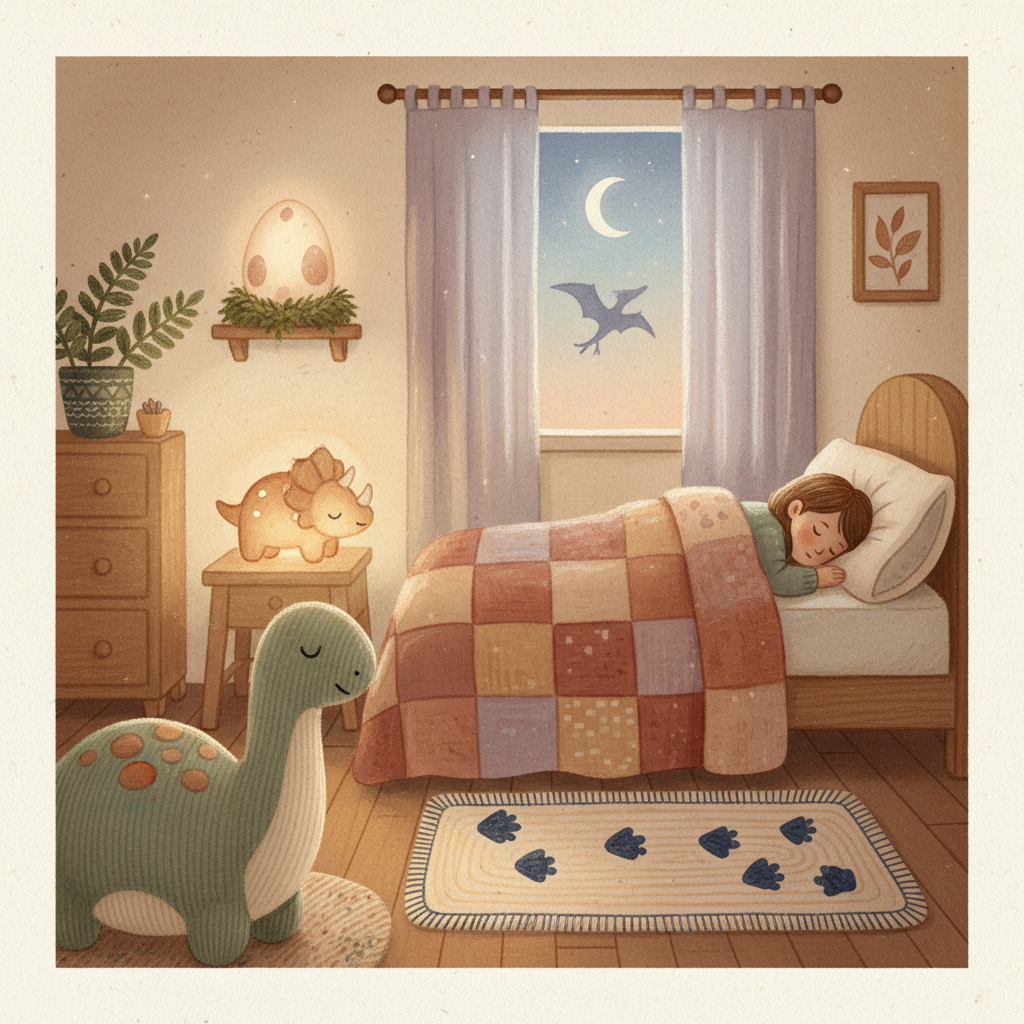
Placement and Projection: Position the night light strategically. It's often best placed low to the ground or in a corner, out of direct line of sight from your child's sleeping position. Avoid lights that project patterns or images onto the ceiling or walls, as these can be stimulating rather than calming.
-
Timers and Motion Sensors: Some night lights include timers, allowing them to turn off after your child has likely fallen asleep, or motion sensors that activate only when movement is detected (e.g., if your child gets up to use the restroom). These features can help limit light exposure during crucial sleep phases.
Integrating a Night Light into Bedtime Routines
Introducing a night light should be a thoughtful part of your child's broader bedtime routine, a ritual that signals the day is winding down. Just as your little T-rex fan transitions from energetic play to calm contemplation, a consistent routine helps their body and mind prepare for sleep. You can find more ideas on creating a calming routine in our posts about Calming Bedtime Routines for Your Anxious Little One or Crafting a Soothing Sensory Bedtime Routine for Little Ones.
Consider these tips for integrating a night light seamlessly:
- Introduce it gradually: If your child has never used a night light, talk about it positively. Frame it as a comforting friend that watches over them while they sleep.
- Make it part of the wind-down: Turn on the night light as part of the final steps of your bedtime routine, perhaps after stories and before snuggles. This associates the light with sleep, rather than stimulating activity.
- Regularly assess: What works for one child or one developmental stage may change. Periodically observe your child's sleep patterns. If they are having trouble falling or staying asleep, try turning off the night light for a few nights to see if it makes a difference. The Mayo Clinic suggests creating a cool, dark, and quiet bedroom environment as optimal for sleep [https://www.mayoclinic.org/diseases-conditions/insomnia/in-depth/sleep-tips/art-20046603]. If the night light seems to be hindering this, it might be time to adjust.
Ultimately, the decision to use a night light is a personal one for each family. By understanding the science behind sleep and light, and making informed choices about the type and use of a night light, you can help create a sleep environment that supports your child's healthy rest and peaceful dreams.
Gentle reminder: This content is for educational purposes only and is not intended to be a substitute for professional medical advice, description, or approaches. Always seek the advice of your pediatrician or other qualified health provider with any questions you may have regarding a medical condition or before making any decisions about your child's sleep, behavior, or health. Never disregard professional medical advice or delay in seeking it because of something you have read here.
Looking for another calming ritual to add to your evening? The Little Dreaming Dino app offers a calm 60-second bedtime ritual for dinosaur-loving kids. Join our waitlist to try it out!
Sources
Little Dreaming Dino
A calm 60-second bedtime ritual for dinosaur-loving little ones.
Parent-led, screen-soft, and made for 3–7 year olds who'd rather hear about a sleepy brontosaurus than brush their teeth.
Sources
- HealthyChildren.org - Sleep — American Academy of Pediatrics
- Children and Sleep — The Sleep Foundation
- Sleep Problems in Children — Stanford Children's Health
- Blue light has strong effect on melatonin suppression — National Institutes of Health
- Sleep tips: 6 steps to better sleep — Mayo Clinic
Educational content only. Not medical advice. Please consult your pediatrician about sleep concerns.