
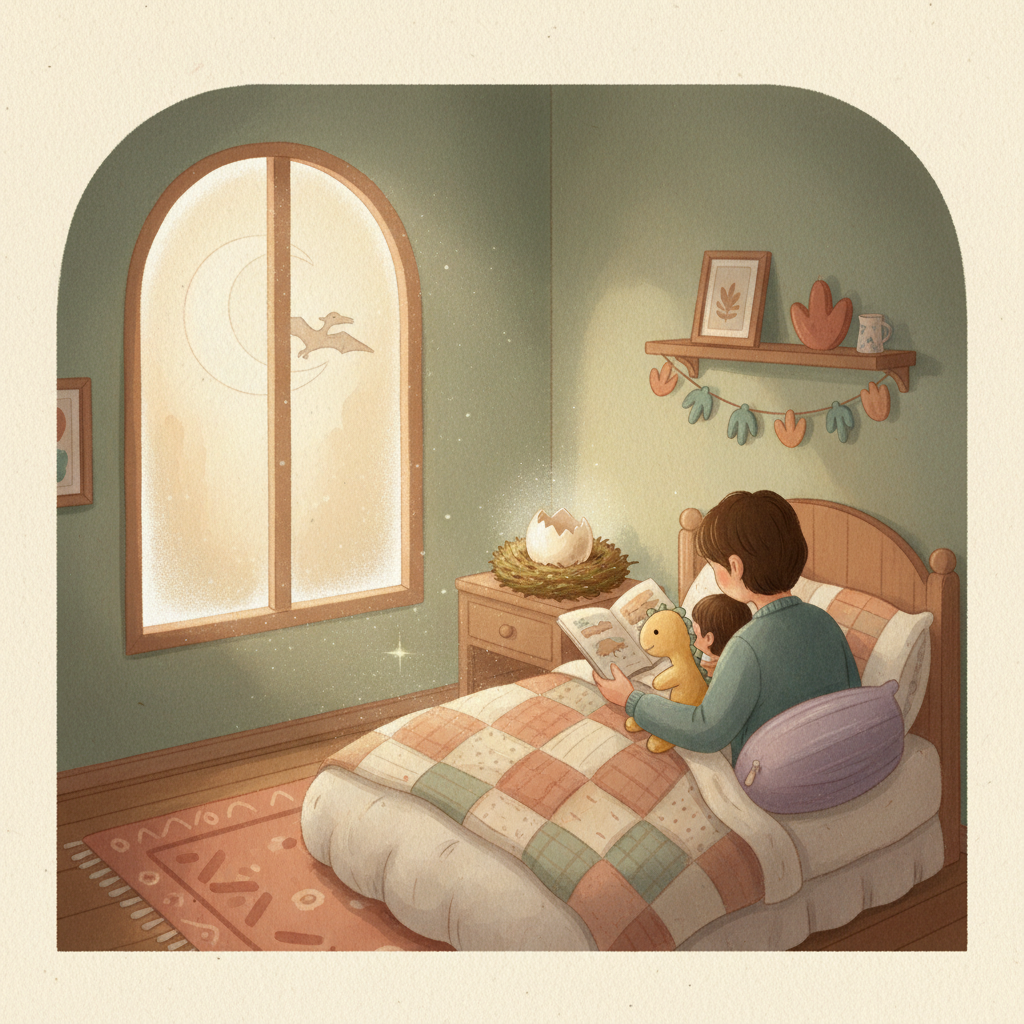
A Gentle Bedtime Routine for Your Anxious Little One
Bedtime can sometimes feel like a daunting expedition, especially for our little paleontologists who carry a bit of extra worry. As parents, we cherish those quiet moments before sleep, but when anxiety casts a shadow, peaceful evenings can seem elusive. The good news is, a thoughtful and consistent bedtime routine can be a powerful tool to help ease those nighttime jitters for your anxious child. It offers predictability and comfort, transforming the transition from day to night into a gentle journey.
Understanding Bedtime Anxieties in Young Children
It’s common for young children to experience some form of anxiety, and this can often heighten around bedtime. For a child, the end of the day might bring a swirl of worries about things they heard or saw, imaginary monsters, or even just the separation from their parents. According to the American Academy of Pediatrics, fears and anxieties are a normal part of development in young children, but when these worries become persistent or interfere significantly with daily life, including sleep, they may need extra support [https://www.healthychildren.org/English/ages-stages/gradeschool/school/Pages/Worries-and-Fears.aspx]. Understanding the root of these fears can be a first step toward helping your child navigate them.
Pediatric experts often suggest that children thrive on predictability. The Sleep Foundation emphasizes that a consistent bedtime routine helps signal to a child's body and mind that it’s time to wind down, which can be particularly beneficial for children prone to anxiety [https://www.sleepfoundation.org/children-and-sleep/sleep-hygiene-for-children]. This consistency creates a safe, familiar framework that can reduce the uncertainty often associated with bedtime fears.
"Consistency and predictability are cornerstones of a healthy sleep environment for all children, and they become even more vital when addressing bedtime anxieties."
Crafting a Predictable and Calming Sequence
The cornerstone of supporting an anxious child at bedtime is creating a routine that is not only calm but also highly predictable. Think of it as mapping out a familiar path for your little explorer, so they know exactly what to expect next. This reduces uncertainty, a primary trigger for anxiety. Many families find that a sequence of 3-5 consistent activities, performed in the same order every night, works wonderfully.
Elements to consider including in your calming sequence:
- Warm Bath or Shower: A warm bath can be incredibly relaxing, helping to lower body temperature afterward, which signals sleep readiness. The Cleveland Clinic notes that a warm bath can be a soothing ritual to help children wind down [https://my.clevelandclinic.org/health/articles/14300-sleep-for-kids].
- Quiet Play or Reading: Dedicate time for low-key activities like building blocks quietly, doing a puzzle, or, perhaps most powerfully, reading together. Reading aloud not only offers a comforting connection but also shifts focus away from anxieties. Consider exploring our insights on calming bedtime routine for anxious child for more ideas.
- Gentle Massage: A light massage can be a wonderfully soothing touch, providing physical comfort and relaxation. Using a calm, soft voice during this time can enhance the experience.
- Hygiene Rituals: Brushing teeth, changing into pajamas, and other self-care tasks, while mundane, are important parts of the routine that signal the approach of sleep.
The key is to keep the energy low and the interactions positive and reassuring. This is a time for connection, not correction or stimulating activities.
The Power of Presence and Reassurance
For an anxious child, your presence and gentle reassurance can be one of the most potent tools during the bedtime routine. It's not about solving all their fears but about acknowledging them and offering a secure base. According to the National Institute of Mental Health, children often look to their parents for cues on how to interpret new or stressful situations, and a calm, supportive parental response can help them manage their anxiety [https://www.nih.gov/news-events/news-releases/childrens-brains-respond-parental-anxiety-cues].
When your child expresses a worry, avoid dismissing it. Instead, acknowledge their feelings with empathy. You might say, "I hear you
Further reading from trusted pediatric sources:
A calm parent checklist
For families who want one practical place to start, keep the evening plan simple, repeatable, and easy for a tired child to recognize. The goal is not perfection. It is a steady rhythm: a quiet cue, a predictable order, and a gentle finish that parents can repeat most nights without turning bedtime into a long negotiation.
- Choose two or three steps that already fit your home.
- Keep the order familiar, even when the exact timing changes.
- Let the room, lights, and voice signal that the day is slowing down.
- Save big conversations, rough play, and stimulating choices for earlier in the evening.
For broader context, parents can compare their routine with trusted sleep education such as American Academy of Pediatrics. Little Dreaming Dino can sit inside that routine as a short, cozy dinosaur moment when families want a softer transition into the final part of the night.
A calm parent checklist
For families who want one practical place to start, keep the evening plan simple, repeatable, and easy for a tired child to recognize. The goal is not perfection. It is a steady rhythm: a quiet cue, a predictable order, and a gentle finish that parents can repeat most nights without turning bedtime into a long negotiation.
- Choose two or three steps that already fit your home.
- Keep the order familiar, even when the exact timing changes.
- Let the room, lights, and voice signal that the day is slowing down.
- Save big conversations, rough play, and stimulating choices for earlier in the evening.
For broader context, parents can compare their routine with trusted sleep education such as American Academy of Pediatrics. Little Dreaming Dino can sit inside that routine as a short, cozy dinosaur moment when families want a softer transition into the final part of the night.
A calm parent checklist
For families who want one practical place to start, keep the evening plan simple, repeatable, and easy for a tired child to recognize. The goal is not perfection. It is a steady rhythm: a quiet cue, a predictable order, and a gentle finish that parents can repeat most nights without turning bedtime into a long negotiation.
- Choose two or three steps that already fit your home.
- Keep the order familiar, even when the exact timing changes.
- Let the room, lights, and voice signal that the day is slowing down.
- Save big conversations, rough play, and stimulating choices for earlier in the evening.
For broader context, parents can compare their routine with trusted sleep education such as American Academy of Pediatrics. Little Dreaming Dino can sit inside that routine as a short, cozy dinosaur moment when families want a softer transition into the final part of the night.
Little Dreaming Dino
A calm 60-second bedtime ritual for dinosaur-loving little ones.
Parent-led, screen-soft, and made for 3–7 year olds who'd rather hear about a sleepy brontosaurus than brush their teeth.
Sources
- Worries and Fears — American Academy of Pediatrics
- Sleep Hygiene for Children — Sleep Foundation
- Sleep for Kids — Cleveland Clinic
- Children's brains respond to parental anxiety cues — National Institute of Mental Health
- Anxiety in Young Children — Zero to Three
Educational content only. Not medical advice. Please consult your pediatrician about sleep concerns.