
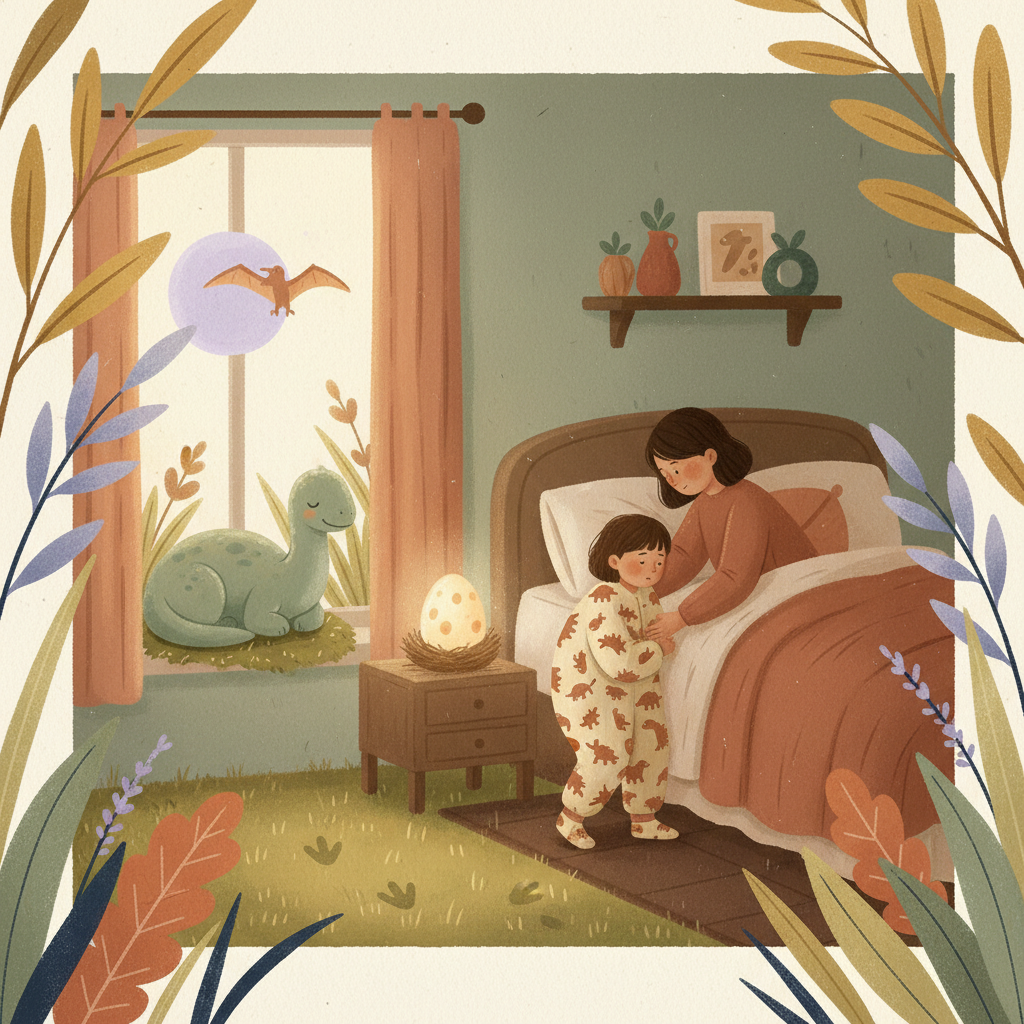
When Your Little Dino Won't Stay in Bed: Gentle Guidance for Parents
Navigating bedtime can sometimes feel like trying to herd a flock of tiny, energetic pterodactyls, especially when your little one just won't stay in bed. If you've found yourself repeatedly escorting your child back to their room, you're far from alone. Many parents experience this common phase, which can be both exhausting and perplexing. The good news is that with a bit of understanding, patience, and gentle strategies, you can help guide your child toward more peaceful nights.
At Little Dreaming Dino, we understand that nurturing calm bedtime habits is a journey, not a sprint. Our aim is to provide you with expert-backed insights and compassionate approaches to help you create a serene environment where your child feels secure and ready for rest. Let's explore some common reasons why children might struggle to stay in bed and discover strategies to support them.
Understanding Why Your Little Dino Roams
It's natural to wonder why your child keeps leaving their bed after tuck-in. Pediatric experts often suggest that various factors can contribute to this behavior. Understanding these underlying reasons can be the first step toward finding effective and gentle solutions.
According to the American Academy of Pediatrics (AAP), common reasons children might get out of bed include seeking attention, fear of the dark, needing to use the restroom, or simply not feeling tired enough to sleep [https://www.healthychildren.org/English/healthy-living/sleep/Pages/Getting-Your-Child-to-Sleep.aspx]. Sometimes, a child might also be testing boundaries or looking for reassurance from a parent. It's a way for them to communicate their needs, even if those needs are expressed at an inconvenient time.
"Consistency and predictability are cornerstones of a successful bedtime routine. Children thrive on knowing what to expect, especially during transitions like moving from playtime to sleep time."
Dr. Marc Weissbluth, a prominent pediatrician and sleep expert, emphasizes the importance of understanding a child's unique sleep needs and patterns. What might seem like "getting out of bed" could also be a sign that a child isn't quite ready for sleep at that specific moment, or they might be looking for comfort [https://www.sleepfoundation.org/children-and-sleep/getting-child-to-sleep]. For your little paleontologist, exploring their independence can also manifest as testing limits around bedtime, especially as they grow and develop a stronger sense of self. Recognizing these different motivations can help parents respond with empathy and clear guidance.
Crafting a Calming Bedtime Routine
One of the most widely recommended strategies for encouraging children to stay in bed is establishing a consistent and calming bedtime routine. Pediatric experts, including those at the Cleveland Clinic, highlight the power of predictability in helping children transition from their active day to a restful night [https://my.clevelandclinic.org/health/articles/14300-sleep-for-kids]. A routine signals to your child's body and mind that it's time to wind down, reducing anxiety and making it easier for them to settle.
Consider incorporating a series of relaxing activities that take place in the same order each night. This could include a warm bath, brushing teeth, putting on pajamas, and then moving to the bedroom for quiet activities. For your tiny T-rex fan, this might mean reading a favorite dinosaur story or having a soft conversation about their day. The key is to keep the activities calm and consistent, avoiding stimulating play or screen time in the hour before bed, as recommended by the National Institutes of Health [https://www.nih.gov/news-events/news-releases/screen-time-impacts-sleep-young-children-study-finds].
Many families find that a visual schedule, using pictures or simple drawings, can be incredibly helpful for younger children. This allows them to see the steps of their bedtime routine and anticipate what comes next, fostering a sense of control and cooperation. When they know what to expect, they may be less likely to seek you out for reassurance or to delay the inevitable.
Setting Clear Expectations and Gentle Boundaries
Once a comforting routine is in place, setting clear and consistent expectations about staying in bed becomes crucial. The Sleep Foundation suggests that parents clearly communicate these expectations to their children during the day, not just at bedtime, when emotions might be running higher [https://www.sleepfoundation.org/children-and-sleep]. Explaining why sleep is important in simple, child-friendly terms can also be beneficial, framing it as a way to get energy for tomorrow's adventures, much like a brontosaurus needs its rest to munch on leaves all day.
When your child does get out of bed, a gentle and firm approach is often suggested. The "silent return" method is one approach many parents try: without much conversation, gently lead your child back to bed. The American Academy of Pediatrics advises against lengthy discussions, lectures, or getting angry, as these can inadvertently reinforce the behavior by providing attention [https://www.healthychildren.org/English/healthy-living/sleep/Pages/Getting-Your-Child-to-Sleep.aspx]. The goal is to make getting out of bed less rewarding than staying in it. Consistency is paramount here; even if you're tired, returning them to bed each time, with minimal interaction, can help them learn the boundary.
Some parents also use a "sleep pass" or "hall pass" system, where the child gets one pass to leave their bed for a specific reason (like a final hug or a drink of water). Once the pass is used, they know there are no more trips out of bed until morning. This can empower children while still maintaining boundaries.
Addressing Common Bedtime Concerns
Sometimes, the reason a child won't stay in bed isn't just about testing boundaries; it might stem from specific fears or needs. Addressing these concerns directly, but calmly, can make a significant difference.
- Fear of the Dark: For children who express fear of the dark, a small nightlight can provide comfort without disrupting sleep too much. The Mayo Clinic suggests using a nightlight with a dim, warm glow [https://www.mayoclinic.org/diseases-conditions/insomnia/in-depth/sleep-tips/art-20046603]. You might also reassure them by checking under the bed or in the closet together, symbolically chasing away any "shadow monsters."
- Need for Reassurance: A quick, reassuring hug and a comforting phrase like "I love you, time to sleep" can be enough. Avoid bringing them into your bed if the goal is for them to sleep independently. Gently escort them back to their own bed, reinforcing that they are safe and loved in their own space.
- Last-Minute Requests: Children can be master negotiators at bedtime. The "one more story," "one more drink," or "I need to tell you something" can be tactics to delay sleep. By building these into the routine (e.g., "after this story, it's time for sleep") or setting limits (e.g., "you had water before bed, no more until morning"), you can manage these requests proactively.
Remember, patience is a parent's best tool. Changes in bedtime habits often take time and consistent effort. Celebrate small victories, like a night where they only got out of bed once instead of five times. It’s a learning process for both you and your child.
The Role of the Sleep Environment
A comfortable and inviting sleep environment can play a surprisingly large role in encouraging children to stay in bed. Think of your child's bedroom as their cozy cave, a safe and peaceful sanctuary for rest. The Stanford Children's Health recommends ensuring the bedroom is dark, quiet, and cool, which are optimal conditions for sleep [https://www.stanfordchildrens.org/en/topic/default?id=sleep-in-toddlers-and-preschoolers-90-P02246].
Consider the temperature of the room; a cooler environment (typically between 60-67 degrees Fahrenheit) is often recommended for sleep. Block out excessive light with blackout curtains, and use a white noise machine if outside sounds are disruptive. Make sure their bedding is comfortable and inviting. Allowing your child to have a say in choosing their sheets or a special stuffed animal can also increase their sense of ownership and comfort in their sleep space.
Sometimes, a child might be resistant to staying in their own bed simply because they associate it with isolation rather than comfort. Spending a few minutes in their room with them before they are expected to sleep, perhaps reading a book or talking quietly, can help create positive associations with their personal sleep space. This can help prevent the feeling of being "sent away" to bed and instead cultivate a sense of security.
Embracing Patience and Seeking Support
It's easy to feel frustrated when your child consistently gets out of bed, but remember that this behavior is often a normal part of development. As parents, offering consistent, loving boundaries is key. There will be nights when it feels like a step backward, and that's okay. Tomorrow is a new day to try again with a fresh perspective.
Many families find that open communication with a partner or another caregiver about bedtime strategies ensures everyone is on the same page, reinforcing consistency for the child. If bedtime continues to be a significant struggle or you have concerns about your child's sleep patterns, reaching out to your pediatrician can provide personalized guidance.
For those moments when you need a gentle wind-down, consider integrating a calm 60-second bedtime ritual app for dinosaur-loving kids. Little Dreaming Dino offers a serene way to end the day with your child, inviting them to ease into slumber with engaging, tranquil content.
Gentle reminder: This article is intended for educational purposes only and is not a substitute for professional medical advice. Always consult with your pediatrician or healthcare provider regarding any sleep, behavior, or health concerns for your child.
Sources
Little Dreaming Dino
A calm 60-second bedtime ritual for dinosaur-loving little ones.
Parent-led, screen-soft, and made for 3–7 year olds who'd rather hear about a sleepy brontosaurus than brush their teeth.
Sources
- Getting Your Child to Sleep — American Academy of Pediatrics
- Children and Sleep — Sleep Foundation
- Sleep for Kids — Cleveland Clinic
- Screen time impacts sleep in young children, study finds — National Institutes of Health
- Sleep Tips: 6 Steps to Better Sleep — Mayo Clinic
- Sleep in Toddlers and Preschoolers — Stanford Children's Health
Educational content only. Not medical advice. Please consult your pediatrician about sleep concerns.