
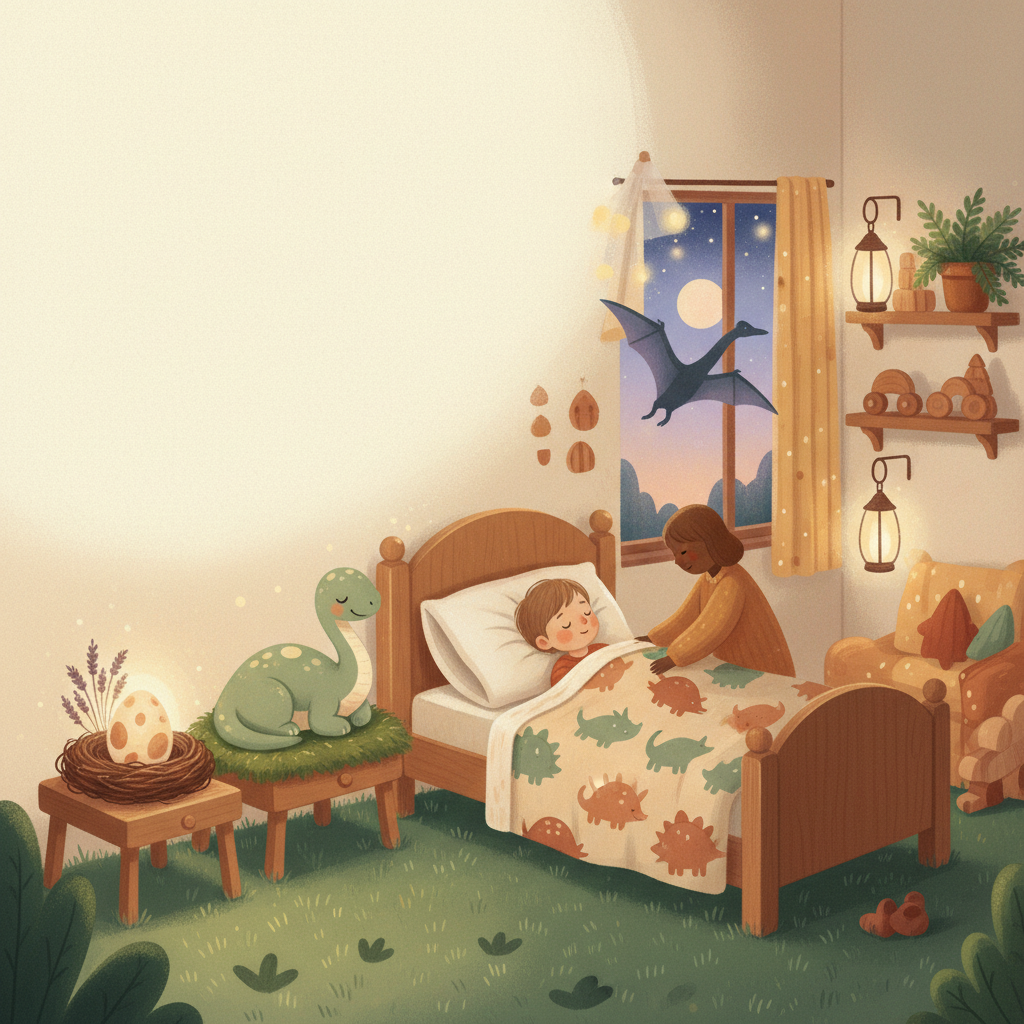
Keeping Your Little Explorer Snug in Bed All Night
As parents, we’ve all been there: tucking in our sweet little one, only to find them padding back to our bedside minutes later, a sleepy shadow in the dim hallway. It’s a common nightly journey for many families, especially when our children are navigating big developmental leaps. For your little paleontologist, learning to stay in their own cozy nest all night is a significant step in their sleep journey, and one that often requires a tender, consistent approach from us.
Helping your child feel secure and content in their bed from dusk till dawn is less about enforcing strict rules and more about nurturing a sense of comfort, predictability, and independence. It's about creating an environment where they feel safe and confident to sleep soundly, knowing you're nearby even if unseen. Pediatric sleep experts often highlight the importance of a consistent bedtime routine as a cornerstone for successful sleep, providing the cues children need to wind down and understand what comes next.
Understanding Why Your Child Leaves Bed
Before we can encourage our little ones to stay put, it’s helpful to gently explore the reasons why they might be leaving their bed. It’s rarely about defiance and almost always rooted in a need or a developmental stage. According to the American Academy of Pediatrics (AAP), common reasons children between the ages of 3 and 7 get out of bed include needing to use the bathroom, thirst, fear of the dark, or simply seeking reassurance and comfort from a parent https://www.healthychildren.org/English/healthy-living/sleep/Pages/Ages-4-to-5-Years-Sleep.aspx. Understanding these underlying factors can help us respond with empathy and strategy.
Sometimes, a child might be experiencing nighttime fears or anxieties, which can feel very real and overwhelming in the quiet darkness. The Sleep Foundation notes that fears of the dark or imaginary monsters are common in preschoolers and early elementary children, and addressing these fears gently is key https://www.sleepfoundation.org/children-and-sleep/sleep-challenges/nightmares-and-night-terrors. Other times, it might be an expression of their growing independence – testing boundaries and asserting control in their own unique way.
It’s also possible that your child is simply not tired enough when they are put to bed, or perhaps they’ve had too much screen time close to bedtime, which can interfere with the body's natural sleep signals. The National Institutes of Health (NIH) suggests limiting screen exposure in the hour before sleep to avoid stimulating young minds right before bed https://www.nih.gov/news-events/news-releases/screen-time-sleep-patterns-linked-kids-development. Observing patterns can offer valuable clues, helping you tailor your approach with thoughtful care.
The Power of a Predictable Bedtime Routine
Consistency is often hailed as a guiding star in the world of children’s sleep, and for good reason. A predictable, calming bedtime routine signals to your child’s body and mind that it’s time to wind down. Think of it like a gentle, rhythmic hum that lulls your little dino into a state of readiness for sleep. The American Academy of Pediatrics emphasizes the profound impact of a consistent bedtime routine on sleep quality and duration for children https://www.healthychildren.org/English/healthy-living/sleep/Pages/Getting-Children-to-Sleep-and-Stay-Asleep.aspx.
Consider a routine that lasts between 20 to 45 minutes and includes calming activities. This might involve:
- A warm bath to relax muscles.
- Brushing teeth and a trip to the potty.
- Reading a few beloved books together in a soft voice.
- Quiet conversation about the day’s happy moments.
- A gentle song or lullaby.
The key is to make it a comforting ritual, free from stimulating activities like energetic play or screen time. Over time, your child will associate these steps with sleep, making the transition from awake to asleep smoother and helping them understand that once the routine is complete, it’s time to stay in bed until morning.
"A consistent, comforting bedtime routine isn't just about getting kids to sleep; it's about building a sense of security and predictability that can empower them to feel safe and calm in their own space throughout the night."
Setting Clear Expectations with Gentle Boundaries
Once your child is in bed, setting clear, simple expectations can be wonderfully effective. This isn't about strict rules, but about gentle boundaries that provide a framework for their understanding. Many families find success with strategies that communicate when it’s okay to leave bed and when it’s time to stay. For instance, explaining that they should stay in bed until the sun comes up, or until a special “ok-to-wake” clock changes color, can give them a tangible signal.
Pediatric experts often suggest a "one more hug" or "one more drink" rule, especially for children who test boundaries. The idea is to acknowledge their request once, fulfill it calmly and quickly, and then gently escort them back to bed with the understanding that this is the last request until morning. Consistency is paramount here; if you sometimes give in to multiple requests and sometimes don
Further reading from trusted pediatric sources:
A calm parent checklist
For families who want one practical place to start, keep the evening plan simple, repeatable, and easy for a tired child to recognize. The goal is not perfection. It is a steady rhythm: a quiet cue, a predictable order, and a gentle finish that parents can repeat most nights without turning bedtime into a long negotiation.
- Choose two or three steps that already fit your home.
- Keep the order familiar, even when the exact timing changes.
- Let the room, lights, and voice signal that the day is slowing down.
- Save big conversations, rough play, and stimulating choices for earlier in the evening.
For broader context, parents can compare their routine with trusted sleep education such as American Academy of Pediatrics. Little Dreaming Dino can sit inside that routine as a short, cozy dinosaur moment when families want a softer transition into the final part of the night.
A calm parent checklist
For families who want one practical place to start, keep the evening plan simple, repeatable, and easy for a tired child to recognize. The goal is not perfection. It is a steady rhythm: a quiet cue, a predictable order, and a gentle finish that parents can repeat most nights without turning bedtime into a long negotiation.
- Choose two or three steps that already fit your home.
- Keep the order familiar, even when the exact timing changes.
- Let the room, lights, and voice signal that the day is slowing down.
- Save big conversations, rough play, and stimulating choices for earlier in the evening.
For broader context, parents can compare their routine with trusted sleep education such as American Academy of Pediatrics. Little Dreaming Dino can sit inside that routine as a short, cozy dinosaur moment when families want a softer transition into the final part of the night.
Little Dreaming Dino
A calm 60-second bedtime ritual for dinosaur-loving little ones.
Parent-led, screen-soft, and made for 3–7 year olds who'd rather hear about a sleepy brontosaurus than brush their teeth.
Sources
- Sleep for Ages 4 to 5 Years — American Academy of Pediatrics
- Nightmares and Night Terrors in Children — Sleep Foundation
- Screen time, sleep patterns linked to kids’ development — National Institutes of Health
- Getting Children to Sleep and Stay Asleep — American Academy of Pediatrics
- Sleep tips for kids: Help your child get some Zzzs — Mayo Clinic
- Teaching Children About Good Touch, Bad Touch — American Academy of Pediatrics
Educational content only. Not medical advice. Please consult your pediatrician about sleep concerns.